A materials testing LIMS that understands physical samples
Materials and product testing doesn't look like clinical lab work — and LIMS software built for high-volume, standardized testing can't handle it. LIMSey is a LIMS for materials testing labs inside manufacturers, built for the way physical testing actually works.
Samples are distinct physical items
A blood vial is one of ten thousand identical tubes. A prototype bracket is one-of-a-kind. LIMSey treats samples as individual physical items that can be connected to one another, split, consumed, or carried through multiple rounds of testing — with full history at every step.
Destructive and non-destructive methods
When a tensile test destroys the sample, the workflow has to know. LIMSey tracks sample state through destructive and non-destructive testing so scheduling, retests, and reporting reflect physical reality.
Flexible, project-based workflows
Product validation isn't a fixed pipeline — test plans change when results come in. LIMSey's jobs, tasks, and templates flex with the work instead of forcing your process into a rigid clinical-style workflow.
Results that become deliverables
Test data flows straight into professional reports and certificates of analysis in the formats your customers and auditors expect — generated in one click, not assembled by hand.
From test plan to final report
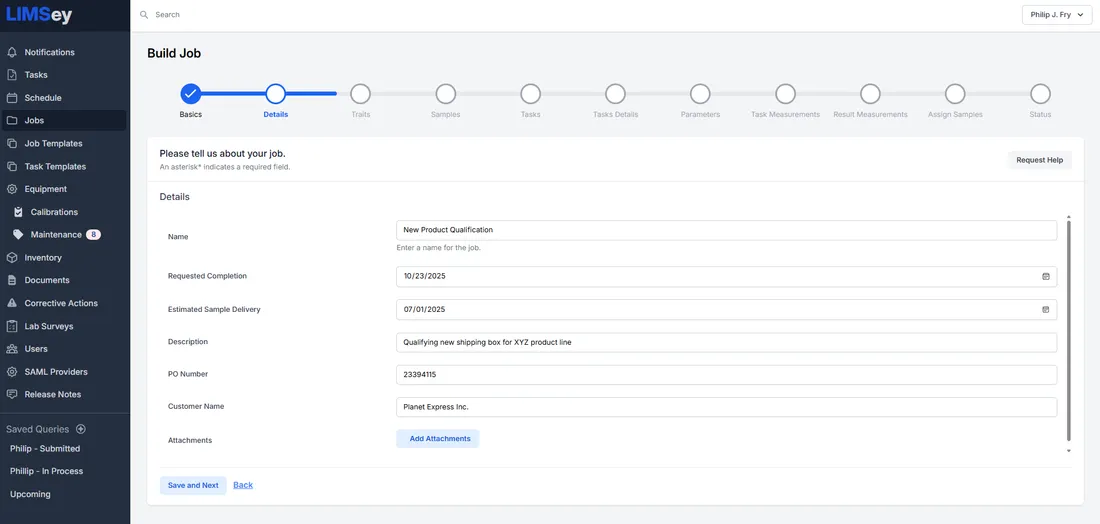
Build jobs from templates with samples, tests, tasks, and reviews included. The Schedule plans people and equipment, technicians record results as they test, and the finished report generates itself. Mechanical, environmental, durability, fatigue, or failure analysis — if it happens on a bench or in a chamber, LIMSey can run it.
What to look for in a materials testing LIMS
Most LIMS were designed for clinical, pharma, or chemistry labs. If you're comparing LIMS software for a materials testing lab, these are the things that separate a fit from a fight:
- Samples as physical items. A specimen or part keeps one history across test rounds and projects, with traits like serial, lot, and material that decide which limits apply. Sample tracking
- Destructive testing in the workflow. When a tensile coupon is consumed, scheduling and retests should know it's gone.
- Instrument data without re-typing. Load frames, hardness testers, and chambers already export files. Results should paste in or import with a row-by-row review instead of being keyed in by hand. Instrument integration
- Calibration tied to results. Calibration schedules and records for each instrument, so an out-of-tolerance finding can be traced to the work it affects. Equipment and calibrations
- Test plans that change. Product validation adds and drops tests as results come in, and the jobs and templates have to flex with it.
LIMSey is a materials testing LIMS for in-house test labs at manufacturers — tensile, fatigue, environmental, and reliability testing for the company's own engineers — with per-user pricing and every feature included. For how it compares with QBench, LabWare, CloudLIMS, and others, see our LIMS comparison for engineering and materials labs.
Testing software that speaks your language
Samples, specimens, test plans, and reports — not patients and panels.